
Beyond the Bookshelves: Designing Libraries for the Future
 Two library renovation projects demonstrate how thoughtful design, collaboration, and a willingness to embrace change can transform the way students and faculty learn, connect, and engage.
Libraries have always been places for learning, but the ways students and faculty use them continue to evolve. Today’s academic libraries must accommodate everything from quiet, individual study to group collaboration, multimedia production, and community building.
At Texas A&M University, two recent renovation projects offered an opportunity to rethink what library spaces could be and how they could better serve the people who use them.
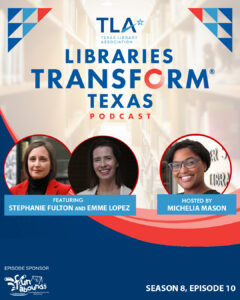
In a recent episode of the Texas Library Association’s Libraries Transform Texas podcast, host Michelia Mason, head librarian at Southwest Research Institute, spoke with Stephanie Fulton, associate university librarian, and Emme Lopez, assistant university librarian, about the transformation of two Medical Sciences Library locations.
While the projects differed significantly in size and scope, both reinforced an important lesson: Successful library renovations aren’t simply about updating buildings. They’re about understanding the needs of a community and creating spaces that respond to those needs.
A New Home for the Medical Sciences Library
For more than four decades, Texas A&M’s flagship Medical Sciences Library occupied a two-building location on the university’s West Campus. But as the School of Public Health expanded, university leadership determined that the library’s longtime home was needed to accommodate additional faculty and academic programs.
The decision launched a multiyear effort to relocate the library approximately five miles away to the Health Science Center campus in Bryan.
The move represented a significant change. The library would transition from approximately 65,000 square feet to 23,500 square feet of public and student space on the first floor of its new building, with additional offices on the fourth floor.
For Fulton, the challenge extended beyond the logistics of moving collections, services, and staff. It also meant helping longtime employees adjust to leaving a space that had been their professional home for decades.
Rather than focusing solely on what the library was losing, the team began exploring what the move could make possible.
The new location placed the library closer to medical and nursing students and created opportunities to develop stronger relationships with academic departments and campus partners.
As Fulton explained, the goal was to think beyond the library as a standalone facility and position it as an integral part of the campus learning community.
That approach led to collaboration with colleagues across Texas A&M Health, including those involved in interprofessional education, simulation, immersive learning, medicine, and nursing.
The result was a library designed not just to provide traditional services, but to support emerging technologies, new approaches to learning, and the broader needs of students and faculty.
Transforming a Library in Round Rock
While the Bryan relocation was underway, Lopez was leading a different kind of transformation at Texas A&M’s Round Rock campus.
The approximately 4,000-square-foot library primarily serves nursing and medical students. Its original design featured large study rooms, an oversized service desk, and an open layout that Lopez described as having a 1990s airport lounge feel.
Although comfortable, the space wasn’t well suited to the ways students study today.
Initially, the project was envisioned as a relatively modest refresh involving paint, furniture, and other cosmetic improvements. But as the library team worked with campus architects, they discovered opportunities to make more substantial changes.
Walls could be removed. Existing rooms could be reconfigured. The large service desk, which occupied a significant portion of the library, could be replaced.
Most importantly, the library team had the opportunity to lead the design around how students and faculty actually used the space.
One of the biggest priorities was creating distinct study zones.
Some students needed quiet spaces for focused, individual work. Others wanted areas where they could collaborate on group projects. Still others preferred what Lopez informally called “coffee shop study,” where students could work independently while remaining surrounded by the activity and conversation of others.
The renovated library accommodates all three approaches.
The project also introduced spaces for audio and video production, giving faculty and staff new reasons to visit and engage with the library.
Another innovation was a self-service collections room where users could access circulating materials outside staffed hours. In addition to books, the collection includes items such as anatomical models and stethoscopes.
Together, these changes transformed the library into a more flexible environment that supports a wider range of academic activities.
The Results: Students Are Coming Back
For both library leaders, one of the most rewarding aspects of the renovations has been seeing how students and faculty have responded.
At the Bryan campus, the library anticipated a relatively quiet opening. Instead, students, faculty, and staff began arriving almost immediately, eager to explore the new space.
The response exceeded expectations, with visitors conducting their own tours and quickly taking advantage of new amenities, including reservable group and individual study rooms.
In Round Rock, the impact has been equally encouraging.
Lopez shared that library usage has doubled or tripled, with students now visiting on weekends when the space previously saw little activity.
She recalled hearing about students making plans to get brunch before heading to the library to study on a Saturday.
For Lopez, that simple conversation represented something significant: The library had become a place students actively wanted to visit.
Faculty engagement has also increased, creating new opportunities for librarians to build relationships and support teaching and learning.
The results demonstrate how thoughtful changes to a physical environment can influence not only how people use a library, but how they perceive its role within the institution.
Lessons Learned: Communication, Flexibility, and Collaboration
Although the two renovations were successful, neither project was without challenges.
Fulton and Lopez emphasized several lessons that other library leaders can apply when considering renovations of their own.
Understand the funding and approval process. Renovations require financial resources, institutional support, and an understanding of how decisions are made. Library leaders should familiarize themselves with capital planning processes and explore opportunities for grants, institutional funding, or other partnerships.
Involve the people who will use the space. Students, faculty, and staff should have a voice in shaping the environment. Their feedback can help identify needs that might otherwise be overlooked.
Keep communicating throughout the project. Initial conversations aren’t enough. As designs evolve and decisions become more specific, stakeholders need opportunities to review plans and provide additional input.
Be prepared for plans to change. During the Bryan renovation, the library’s proposed space changed significantly, requiring the team to revisit and adjust its plans. Fulton emphasized that flexibility is essential, even when decisions appear to be finalized.
Learn from other libraries and design professionals. Visiting recently renovated libraries, talking with colleagues, and understanding the role of architects can help library leaders avoid common mistakes and discover new possibilities.
Lopez also stressed the importance of paying attention to details throughout the process. While architects and contractors bring valuable expertise, library leaders must remain actively involved to ensure the finished space reflects their vision.
More Than a Place to Study
Perhaps the most important takeaway from the conversation was the broader role libraries play in supporting students and campus communities.
Fulton hopes the Bryan renovation demonstrates that libraries are essential partners in education and research, with a shared commitment to student success and well-being.
Lopez expanded on that idea, noting that health sciences campuses are often commuter environments without traditional student gathering spaces.
In those settings, libraries can serve a particularly important purpose.
“Libraries provide a really important kind of landing space for students where they know that they can get help from somebody, that they can talk to somebody,” Lopez explained.
That sense of connection distinguishes a library from an ordinary study area.
Students need places where they feel comfortable, supported, and welcome. They need opportunities to collaborate, seek assistance, and build relationships.
By reimagining their spaces around those needs, libraries can strengthen their value to the institutions and communities they serve.
The experiences at Texas A&M offer an encouraging reminder that library renovations are about more than walls, furniture, or square footage.
They’re opportunities to rethink how libraries support learning, build connections, and remain essential to the communities they serve.
Listen to the full conversation on the Libraries Transform Texas podcast to hear more from Stephanie Fulton and Emme Lopez about their renovation experiences, the challenges they encountered, and their advice for library leaders considering similar projects.
Libraries Transform Texas is produced by the Texas Library Association. This episode is sponsored by Fun Abounds.
Related News
Beyond the Numbers: Turning Library Data into Better Decisions
In the latest episode of Libraries Transform Texas, host Michelia Mason, head librarian at Southwest Research Institute, welcomes Dana Whitmire, electronic resources coordinator at the UT San Antonio Health Science […]
Celebrating 250 Years Through Texas Stories
In a recent episode of the Libraries Transform Texas podcast, host Michelle Chan Santos, coordinator for the Texas Center for the Book, welcomed Susan Floyd, communications officer at the Texas State Library and Archives Commission (TSLAC), for a conversation about the Texas America 250 Project and the 2026 Texas Great Reads.